
A smile does not need to be perfectly uniform to be healthy or attractive. Still, small concerns such as stubborn discoloration, uneven edges, gaps, or misshapen teeth can affect how comfortable someone feels when speaking or smiling. Dental veneers offer one possible way to address several of these concerns at the same time.
For patients exploring veneers in Fairview, NC, understanding the treatment is an important first step. Veneers can create natural-looking changes, but they are not the right choice for every tooth or every patient. A thoughtful cosmetic plan should support oral health, preserve as much natural tooth structure as possible, and reflect the patient’s personal goals.
This article provides general educational information and is not a diagnosis or treatment recommendation. A dentist must examine the teeth, gums, and bite to determine whether veneers are appropriate.
What Are Dental Veneers?
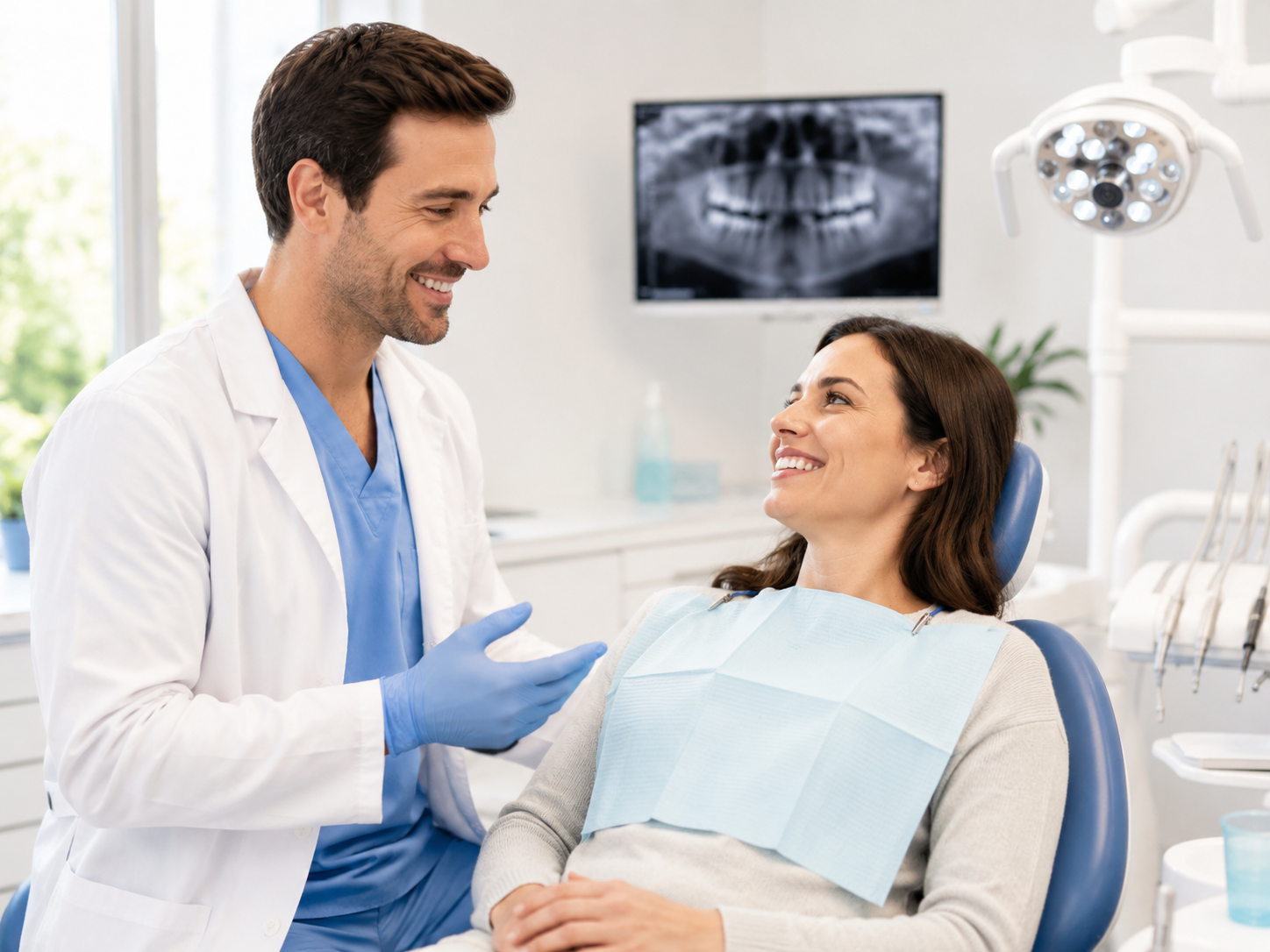
Veneers are thin restorations that cover the visible front surface of a tooth. A simple way to picture a veneer is as a custom-made facing designed to improve a tooth’s color, shape, size, or proportion. Unlike a dental crown, which generally covers most or all of a tooth, a veneer usually focuses on the area seen when a person smiles.
Veneers may be made from porcelain or tooth-colored composite resin. Each material has advantages, limitations, and different preparation needs.
Porcelain veneers
Porcelain veneers are created to match the color and light-reflecting qualities of natural enamel. They are commonly chosen for their lifelike appearance and resistance to external staining. The dentist plans the shape and shade, a dental laboratory or fabrication system creates the restorations, and the veneers are then bonded to the teeth.
Composite veneers
Composite veneers use a tooth-colored resin similar to the material used for cosmetic bonding. In some cases, the dentist can apply and shape the material directly on the tooth. Composite may require less tooth preparation and can sometimes be repaired more easily, although it may stain or wear differently than porcelain.
The best material depends on the condition of the teeth, the number of teeth involved, the desired change, the bite, and the patient’s preferences. Research on dental veneer materials and techniques also emphasizes the importance of conservative planning and preserving tooth structure.
What Cosmetic Concerns Can Veneers Address?
Veneers are versatile, but they are not meant to fix every dental problem. A dentist may consider them for concerns such as:
- Discoloration that does not respond as desired to whitening
- Small spaces or gaps between teeth
- Mildly uneven or irregular tooth shapes
- Worn, chipped, or rough front edges
- Teeth that appear undersized in relation to the smile
- Minor visual asymmetry among the front teeth
A veneer can conceal an imperfection, but it does not treat active decay, gum disease, or an unhealthy tooth underneath. Those issues generally need attention before cosmetic treatment begins.
Veneers also are not always the most conservative option. Whitening may be enough for generalized staining. Dental bonding may improve a small chip, while orthodontic treatment may be more appropriate when tooth position or bite alignment is the main concern. A good consultation compares these choices rather than assuming veneers are the only solution.
Who May Be a Good Candidate for Veneers?
A suitable candidate generally has healthy teeth and gums, enough sound tooth structure to support bonding, and realistic expectations about the result. Consistent brushing, flossing, and professional preventive care are also important because the natural teeth remain underneath the restorations.
A dentist will look beyond appearance during the evaluation. The examination may include the teeth, gums, existing fillings, enamel, jaw relationship, and the way the upper and lower teeth come together. Dental images or X-rays may be recommended when needed to assess underlying health.
Certain findings may affect the plan. Untreated cavities, inflamed gums, significant enamel loss, or severely weakened teeth may need to be addressed first. Clenching and grinding can place heavy pressure on veneers and increase the risk of chipping or fracture. Depending on the situation, the dentist may discuss bite management or a protective nightguard.
Patients with substantial crowding, large bite discrepancies, or extensive structural damage may benefit from another treatment or a combination of treatments. The goal is not simply to place veneers; it is to choose an approach that makes sense for the entire mouth.
What to Expect From the Veneer Process
The exact process varies according to the veneer material, the teeth being treated, and the complexity of the smile plan. Porcelain treatment commonly involves more than one appointment, while some composite treatments may follow a different schedule.
1. Consultation and smile planning
The first visit is a chance to discuss what the patient likes, what feels out of balance, and how noticeable or subtle the desired change should be. Bringing photographs or describing specific concerns can help, but the finished smile should still fit the patient’s face and natural features.
The dentist evaluates oral health and explains reasonable alternatives. Photographs, scans, impressions, shade records, or a smile preview may be used to plan tooth proportions and help the patient understand the proposed result.
2. Tooth preparation
Some veneers require the removal of a small amount of enamel so the restoration can fit naturally without looking bulky. Preparation varies by case, and “no-prep” or minimal-prep options are not suitable for everyone.
If enamel must be removed, the decision deserves careful consideration because that change is generally not reversible. The dentist should explain how much preparation is anticipated before treatment begins.
3. Impressions, scans, and temporary restorations
After preparation, the dentist records the shape and position of the teeth with an impression or digital scan. If a laboratory will make porcelain veneers, temporary restorations may be placed when needed while the final ones are created.
Temporary veneers may feel different from the final restorations. Patients should follow the dental team’s instructions about eating, cleaning, and what to do if a temporary becomes loose.
4. Try-in and bonding
Before final bonding, the dentist checks the veneer’s fit, color, shape, and relationship to the surrounding teeth. Minor refinements may be made. The tooth and veneer are then carefully prepared, and a dental adhesive bonds the restoration in place.
The bite is checked afterward to make sure the veneer does not receive inappropriate pressure. A follow-up may also be recommended to assess comfort and gum response.
Do Veneers Look Natural?
Well-planned veneers are intended to complement a person’s smile rather than look artificial. Natural teeth have small variations in translucency, texture, and shape. Reproducing those details can help veneers blend with nearby teeth.
Shade is only one part of the design. Tooth length, width, edge shape, facial features, gum contours, and the amount of tooth visible when talking all affect the result. The brightest or most uniform option is not automatically the most natural one.
Patients should communicate openly during planning and try-in. Some prefer a polished, symmetrical appearance, while others want subtle character and variation. There is no single “correct” smile design.
How Long Do Veneers Last?
Veneers are durable restorations, but they are not permanent or indestructible. Their longevity varies with material, tooth preparation, bonding conditions, bite forces, oral hygiene, habits, and routine dental care. A systematic review of porcelain laminate veneers found favorable long-term performance overall while also documenting possible complications and the eventual need for maintenance or replacement.
Potential concerns include chipping, fracture, debonding, changes in appearance, sensitivity, gum irritation, or decay in the remaining natural tooth. These outcomes are not inevitable, but patients should understand them before making a decision.
A veneer that becomes loose or damaged should be evaluated promptly. It should not be glued back into place with household products.
How to Care for Veneers
Veneers do not require a complicated home-care routine. They do require the same consistent habits that help protect natural teeth and gums:
- Brush twice daily with a soft-bristled toothbrush and non-abrasive toothpaste.
- Clean between the teeth every day with floss or another dentist-recommended tool.
- Attend routine dental examinations and professional cleanings.
- Avoid using teeth to open packages or hold hard objects.
- Be cautious when biting directly into very hard foods.
- Wear a sports mouthguard when appropriate.
- Use a nightguard if one is recommended for clenching or grinding.
Although porcelain resists many stains, the natural teeth around veneers can still change color. Tobacco and frequently consumed dark beverages can also affect the overall appearance of the smile. Preventive care helps the dentist monitor both the veneers and the teeth supporting them.
How Much Do Veneers Cost in Fairview, NC?
The cost of veneers varies because treatment is customized. Important factors include the veneer material, the number of teeth treated, the complexity of preparation, laboratory work, and whether other dental care is needed first.
Dental insurance often limits coverage for treatment performed solely for cosmetic reasons, but policies differ. Patients should ask for a written treatment estimate and contact their insurance carrier for details about their specific benefits. The most useful cost discussion happens after an examination, when the dentist can explain the recommended treatment and alternatives.
Comparing plans should involve more than the initial fee. Patients may also want to ask about the proposed material, how much enamel will be changed, what is included in the plan, and what maintenance could be needed later.
Frequently Asked Questions About Veneers
Does getting veneers hurt?
Patient comfort is considered throughout treatment, and local anesthetic may be used when tooth preparation is needed. Some people notice temporary sensitivity or gum tenderness afterward. Persistent or increasing discomfort should be reported to the dentist.
Can veneers get cavities?
The veneer itself cannot develop decay, but the natural tooth around or beneath it can. Daily cleaning and regular dental visits remain essential.
Can veneers be whitened?
Whitening products do not lighten porcelain or composite in the same way they lighten natural enamel. If whitening is part of a smile plan, a dentist may recommend completing it before selecting the final veneer shade.
Are veneers reversible?
When enamel is removed, veneer treatment is generally considered irreversible because the prepared tooth will continue to need protection from a restoration. Preparation-free cases are different, but they require careful evaluation and are not appropriate for every smile.
How many veneers does a patient need?
There is no standard number. Some patients want to improve one tooth, while others are concerned about several teeth visible in their smile. The dentist considers smile width, tooth color, symmetry, and the patient’s goals when recommending a plan.
Are veneers better than bonding or crowns?
Each treatment serves a different purpose. Bonding may be a conservative choice for smaller cosmetic changes. Veneers cover the front surface of a tooth, while crowns provide broader coverage and may be considered when a tooth needs more structural support. An examination is necessary to compare them responsibly.
Considering Veneers in Fairview, NC?
Veneers can be a valuable option for changing the color, shape, spacing, or balance of selected teeth. The most satisfying results begin with healthy teeth and gums, careful planning, and an honest conversation about benefits, limitations, alternatives, and long-term care.
Fairview Dental offers veneer consultations for patients in Fairview, NC. Anyone interested in cosmetic changes can bring questions, share what they would like to improve, and learn which options may suit their oral health and preferences. Contact the practice to take the next step toward a personalized smile plan.