

You can explore a range of smile makeover options in Fairview, NC that fit your goals, budget, and comfort level. A personalized plan — from teeth whitening and veneers to implants and gum reshaping — can correct discoloration, gaps, chips, and missing teeth so you feel confident smiling again.
The article walks through practical choices, what to expect during treatment, financing options, and how to pick a trustworthy dental team nearby so you can make informed decisions. It also explains simple steps to protect your results and when to schedule a consultation to get started.
Understanding Smile Transformations
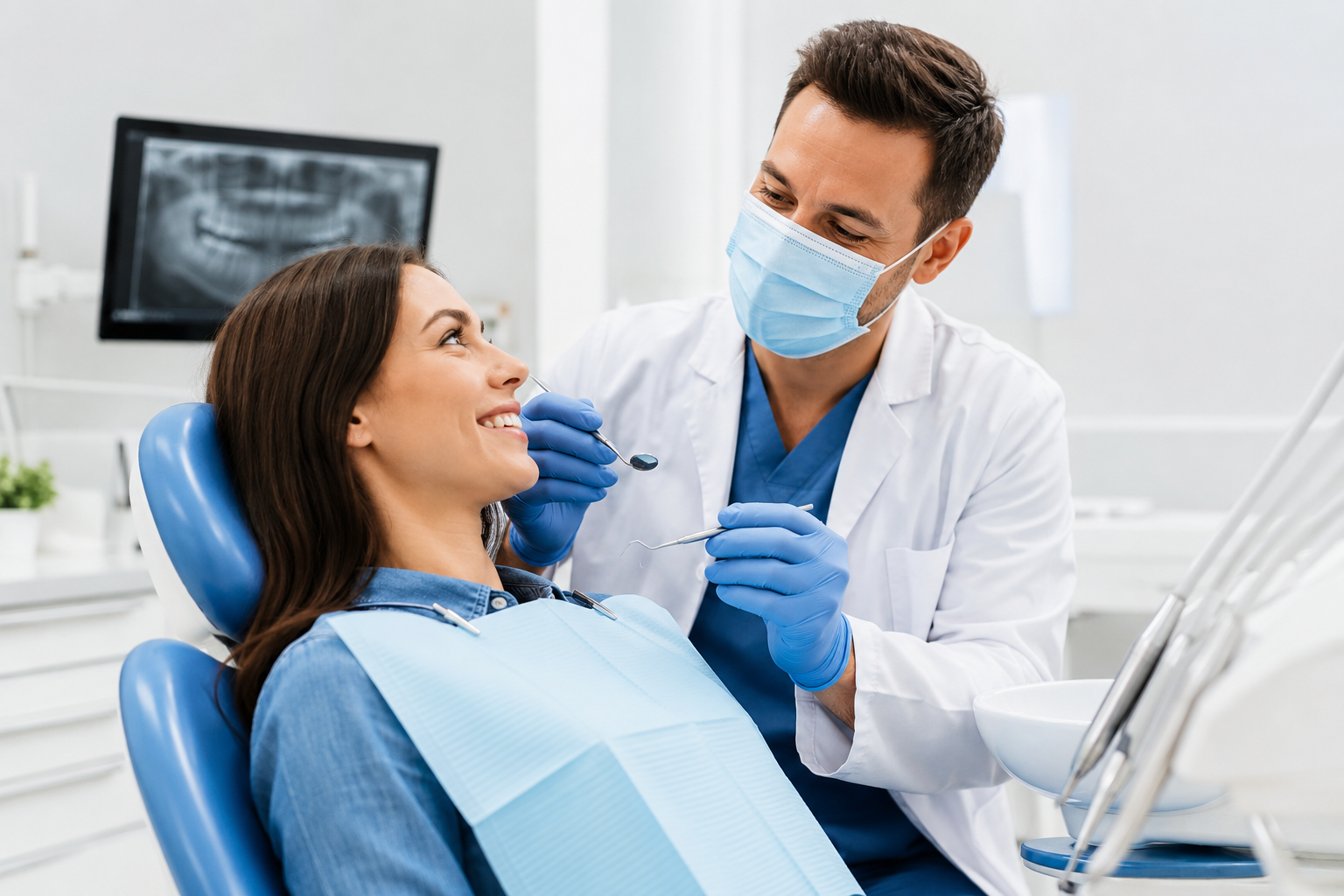
Smile transformations combine cosmetic and restorative dentistry to correct appearance, function, and oral health. They address stains, chipped or missing teeth, alignment, bite issues, and gum contouring using predictable, modern techniques tailored to each patient.
What Constitutes a Smile Makeover
A smile makeover blends treatments that improve teeth color, shape, position, and supporting gum and bone. Common procedures include professional teeth whitening, porcelain veneers, composite bonding, clear aligners, crowns, dental implants, and gum reshaping. Each option targets a specific issue: whitening for discoloration, veneers for shape and size, aligners for crowding or spacing, crowns for broken or heavily filled teeth, and implants for permanent tooth replacement.
The team evaluates bite function and tooth wear as part of the plan. They may recommend combining procedures—such as whitening before veneers—to optimize appearance and conserve tooth structure. Care focuses on durability, esthetics, and maintenance requirements.
Determining Candidacy
Candidacy depends on oral health, expectations, and treatment goals. Healthy gums and no active decay usually come first; untreated periodontal disease or large cavities require care before cosmetic work. The dentist reviews medical history, medications, and habits like smoking or grinding that affect outcomes.
They use digital imaging, intraoral photos, and X-rays to assess bone support, tooth alignment, and structural needs. Age alone rarely disqualifies a patient; instead, stability of gum health and realistic expectations guide decisions. Financial considerations and time for staged treatment also shape candidacy.
Customizing Your Treatment Plan
Customization begins with a detailed consult and diagnostic records, including study models and a digital smile design mockup. The dentist discusses aesthetic preferences—whiteness level, tooth proportions, and smile line—and functional needs such as bite balance and chewing comfort. This collaborative process sets priorities and sequences treatment logically.
Plans often phase treatments: address health issues first, then alignment, followed by whitening and final restorations. The team provides options with pros, cons, timelines, and estimated costs so patients choose what fits their lifestyle. They also outline aftercare—night guards, hygiene schedules, and periodic exams—to preserve results and protect investment.
Popular Cosmetic Dentistry Treatments
Patients in Fairview often want clear, practical options that improve color, shape, and alignment. This section outlines modern whitening methods, durable restorations, and discreet orthodontic choices to help patients decide which path fits their smile goals.
Teeth Whitening Innovations
In-office laser and LED-accelerated systems deliver predictable results in one visit, typically lightening teeth by 4–8 shades. Dentists use professional-strength hydrogen peroxide gels with protective barriers for gums, offering faster, safer whitening than over-the-counter kits.
Take-home trays made from digital impressions provide custom fit and controlled peroxide concentrations for gradual whitening at home. These are ideal for touch-ups after in-office treatment or for patients with sensitive teeth, because concentration and wear time can be adjusted.
For intrinsic stains (tetracycline or fluorosis), internal bleaching of root-treated teeth or porcelain restorations may be necessary. Dentists evaluate enamel thickness, previous restorations, and sensitivity before recommending a whitening pathway.
Porcelain Veneers and Bonding
Porcelain veneers reshape teeth with thin ceramic shells bonded to the front surface, lasting 10–15 years with proper care. Dentists digitally plan veneers to match tooth proportion, shade, and smile line; minimal enamel reduction preserves structure while achieving dramatic aesthetic change.
Composite bonding uses resin sculpted directly onto teeth to repair chips, close small gaps, or alter shape in a single visit. Bonding costs less than porcelain but may stain or chip sooner; it usually lasts 5–7 years depending on oral habits.
When choosing between veneers and bonding, consider budget, longevity, and the extent of change needed. Dentists discuss shade matching, mock-ups, and maintenance—like avoiding staining foods—to help patients pick the appropriate restoration.
Orthodontic Solutions for Adults
Clear aligner systems (e.g., Invisalign) move teeth using a series of removable trays, suitable for crowding, spacing, and some bite issues. Aligners permit eating without restrictions and are easier to maintain for oral hygiene, though compliance—wearing them 20–22 hours daily—determines success.
Ceramic or tooth-colored braces offer fixed, discreet treatment when aligners aren’t appropriate for complex movements. These appliances handle more significant bite corrections and typically require scheduled adjustments every 4–6 weeks.
For patients wanting faster results, accelerated orthodontics combines aligners or braces with adjunctive techniques (micro-osteoperforation, vibration) to shorten treatment time. Dentists evaluate bone health, periodontal stability, and restorability before recommending accelerated protocols.
Addressing Common Dental Concerns
This section explains practical treatments for damaged teeth, spacing and alignment issues, and gum concerns. Each topic focuses on tried-and-true options that balance appearance, function, and patient comfort.
Dealing with Chipped or Broken Teeth
Dentists in Fairview often repair chips and breaks with dental bonding, porcelain veneers, or crowns depending on severity. Bonding uses tooth-colored composite to restore small chips in a single visit; it preserves most natural tooth structure but can stain over years.
Porcelain veneers cover the front surface for larger cosmetic repairs, provide stain resistance, and last 10–15 years with good care. They require minor enamel removal and a two-visit workflow: prep and final placement.
For fractures that compromise tooth strength or extend below the gumline, a full-coverage crown or root canal plus crown may be necessary. Crowns restore biting function and protect the remaining tooth. Emergency care focuses on pain control and temporary protection until definitive restoration.
Treating Gaps and Misalignment
Clear aligners and traditional braces both correct spacing and mild-to-moderate malocclusion in Fairview practices. Clear aligners suit adults seeking discreet treatment and removable trays that gradually shift teeth; they require diligent wear (20–22 hours/day). Braces remain the most predictable option for complex movements, offering fixed control over tooth forces.
Dental bonding and veneers provide cosmetic closure for small gaps without moving teeth, useful when alignment is otherwise acceptable. These are faster but do not address bite issues and may need replacement over time. Orthodontic consultation clarifies whether movement or cosmetic masking best meets functional and aesthetic goals.
For patients with missing teeth, implant-supported crowns or bridges combine alignment correction with prosthetic replacement. Implants maintain jawbone volume and avoid altering adjacent teeth, making them a long-term solution when bone quantity and health permit.
Improving Gum Health and Appearance
Gum health directly affects smile aesthetics and long-term dental stability, so periodontal assessment is a first step. Routine scaling and root planing treat moderate gum disease by removing plaque and tartar below the gumline; follow-up cleanings and improved home care prevent recurrence.
For uneven gum contours or a “gummy” smile, crown lengthening or soft-tissue recontouring sculpts the gumline using minimally invasive techniques and local anesthesia. These procedures expose more tooth structure and create a balanced tooth-to-gum ratio.
When recession exposes roots, a connective tissue graft can cover sensitive areas and rebuild a natural margin. The choice between surgical correction and conservative monitoring depends on recession severity, esthetic preference, and overall oral health.
Restorative Options That Enhance Your Smile
These restorative choices repair damage, restore function, and create a natural appearance. They focus on preserving tooth structure, matching existing teeth, and delivering long-term results that suit everyday life.
Tooth-Colored Fillings and Crowns
Tooth-colored fillings (composite resin) repair cavities and small chips while blending with adjacent teeth. They bond to enamel and dentin, allowing more conservative removal of decay than metal fillings. Patients often prefer them for front and visible teeth because the shade can be matched precisely, and the material resists staining when cared for properly.
Crowns cover larger fractures, root canal-treated teeth, or teeth with extensive decay. Modern crowns use porcelain-fused-to-zirconia or full-contour zirconia for strength and lifelike translucency. Preparation usually requires one or two visits: the dentist shapes the tooth, takes digital impressions, and places a temporary crown if needed. Lab-fabricated or same-day CAD/CAM crowns restore chewing function and protect the remaining tooth, with typical lifespans of 10–15 years when maintained.
Key patient considerations:
- Insurance and out-of-pocket costs vary by material and complexity.
- Longevity depends on oral hygiene, bite forces, and regular checkups.
- Sensitivity after placement is common and usually short-lived.
Bridges and Dental Implants
Bridges replace one or several adjacent missing teeth by anchoring to neighboring teeth or implants. Traditional fixed bridges use crowns on abutment teeth with pontics spanning the gap. They restore chewing and speech quickly but require altering healthy teeth for support. Maryland or resin-bonded bridges conserve adjacent teeth but suit smaller front-tooth gaps.
Dental implants replace single teeth or support implant bridges and overdentures with titanium posts placed in bone. After healing and osseointegration (typically 3–6 months), a custom abutment and crown attach to the implant. Implants preserve jawbone and avoid altering neighboring teeth, offering the most durable, natural-feeling solution. Candidacy depends on bone volume, overall health, and smoking status.
Patient decision points:
- Implants have higher upfront cost but often lower long-term expense and maintenance.
- Bridge choice balances immediacy, cost, and preservation of healthy teeth.
- Dental care plans, imaging (CBCT), and a treatment timeline help set realistic expectations.
Comfort and Safety in Smile Enhancements
Patients can expect targeted pain control, precise imaging, and strict infection control during cosmetic dental care. Clinics in Fairview, NC typically combine local anesthesia, sedation options, and digital planning to reduce discomfort and speed recovery.
Modern Techniques for Minimal Discomfort
Dentists use topical numbing gel before injections and buffered local anesthetics to reduce sting and onset time. For longer or more anxious procedures, they offer oral sedatives, nitrous oxide, or IV sedation administered by trained staff.
Digital tools lower treatment trauma. Intraoral scanners and 3D CBCT imaging let clinicians plan veneers, implants, and gum reshaping with millimeter accuracy, which minimizes unnecessary tissue manipulation. Guided surgery templates reduce chair time and improve implant placement predictability.
Minimally invasive materials help too. Same-day restorations made from high-strength ceramics require less tooth reduction than traditional crowns. Laser dentistry can contour soft tissue with less bleeding and faster healing compared with scalpels.
Safety and Sterilization Practices
Sterilization follows CDC and ADA standards: autoclaving reusable instruments, using single‑use disposables when possible, and maintaining instrument tracking and biological indicators. Staff document sterilizer maintenance and cycle records to ensure compliance.
Infection control includes surface disinfection, barrier protection for chairs and equipment, and air filtration systems in many modern practices. Clinical teams wear appropriate PPE and follow hand hygiene protocols between patients.
Medication and emergency preparedness are standard. Offices keep emergency drugs, oxygen, and AEDs on site, and team members complete regular basic life support and sedation emergency training. Patients receive pre-procedure screening for medical history, allergies, and medications to tailor safe care.
Financing Your Dream Smile
Patients learn clear cost options, coverage details, and practical steps to plan payments for veneers, implants, crowns, or Invisalign in Fairview, NC. The following explains insurance limits, in-office plans, third-party financing, and what the first consult will cover financially and clinically.
Insurance and Flexible Payment Plans
Most dental insurance in Fairview covers preventive care fully and pays partial amounts for restorative work like crowns and root canals. Cosmetic-only procedures such as veneers and elective whitening are rarely covered; implant coverage varies by plan and may require medical-dental coordination. Patients should obtain an estimate and preauthorization when possible to avoid surprise out-of-pocket bills.
Many practices offer in-office payment plans that split costs over several months with no interest or low interest. Popular third-party lenders (CareCredit, LendingClub, SmileFlex) provide 3–24 month deferred-interest and longer-term options up to 60 months. Clinics typically assist with applications and explain monthly payment examples so patients can compare total cost, interest, and required down payment.
What to Expect During Your Consultation
The consultation begins with a focused medical and dental history, digital x-rays, and intraoral photos to create an individualized treatment plan. The clinician discusses specific goals—like replacing a missing tooth with an implant, correcting bite with orthodontics, or bonding for chips—and provides a written estimate that breaks materials, lab fees, and practitioner time into line items.
Patients receive insurance verification and a clear payment timetable at the visit. The team reviews available financing choices, required deposits (commonly 20–50% for lab-based work), and appointment sequencing so patients know when payments are due relative to treatment stages.
Choosing the Right Dental Team in Fairview, NC
Find a dental team that blends technical skill, clear communication, and patient comfort. Look for dentists who explain treatment options, show before-and-after examples, and coordinate care with specialists when needed.
Questions to Ask Your Dentist
Ask about specific treatment experience: “How many smile makeovers involving veneers, crowns, or Invisalign has the practice completed this year?” This reveals volume and recent practice.
Request to see patient photos and, if possible, a brief case sheet showing treatment steps and timelines. Visuals clarify expected results and recovery.
Clarify the diagnostic approach: “Do you use digital smile design, intraoral scanning, and CBCT imaging for complex cases?” Those tools improve planning accuracy.
Discuss pain control and sedation options: ask which sedation levels the dentist offers, who administers them, and safety monitoring protocols.
Confirm costs and payment plans: request a written estimate that separates lab fees, provisional restorations, and follow-up visits.
Ask about warranties or maintenance programs for restorations and what routine care the practice recommends post-treatment.
Importance of Experience and Continuing Education
Experience matters for predictable outcomes; prioritize providers with documented case histories in cosmetic and restorative work. A dentist who has performed many porcelain veneer cases or full-mouth rehabilitations will better anticipate challenges and refine techniques.
Continuing education ensures the dentist uses current materials and protocols. Look for recent coursework in digital smile design, adhesive dentistry, implant prosthetics, or laser dentistry listed on the practice website or displayed in-office.
Check professional memberships and certificates from organizations like the American Academy of Cosmetic Dentistry or local dental societies. These indicate commitment to standards and peer review.
Also confirm the team’s training: dental hygienists and assistants should have certifications for digital imaging, infection control, and chairside CAD/CAM support to streamline treatment and improve comfort.
Maintaining Results for Years to Come
Consistent daily habits and routine dental visits preserve the appearance and function of a smile makeover. Small, specific actions—like timing brushing, avoiding particular foods, and scheduling maintenance—make the biggest difference in long-term results.
Home Care Tips After Treatment
After veneers or crowns, the patient should brush twice daily with a soft-bristled brush and non-abrasive fluoride toothpaste to avoid surface wear. Flossing once daily is essential; use floss threaders or interdental brushes for bridges and tight contacts.
Avoid hard foods such as ice, hard candy, and unpopped popcorn kernels that can chip restorations. If the patient grinds or clenches teeth, a custom nightguard fitted by the dentist prevents fracture and wear.
Limit staining agents—coffee, red wine, tobacco—and rinse with water after consuming them to reduce discoloration. For whitening touch-ups after professional bleaching, use dentist-recommended take-home trays or single-dose gels to maintain shade without overusing OTC products.
If sensitivity occurs after treatment, use desensitizing toothpaste and report persistent pain to the dentist; sensitivity usually resolves with simple adjustments or topical treatments.
Scheduling Regular Check-Ups
Patients should see the dentist every six months for routine exams and cleanings unless the dentist prescribes a different interval based on risk factors. During these visits, the clinician inspects margins of crowns and veneers, checks for decay under restorations, and polishes surfaces to remove staining.
For implant-supported restorations, schedule professional maintenance every 3–6 months initially, then at least biannually to monitor peri-implant tissue health and remove biofilm. The dental team will take periodic radiographs to confirm bone stability around implants and detect early problems.
Discuss any changes—looseness, discoloration, or bite shifts—immediately rather than waiting for the next appointment. Early intervention typically requires less invasive repair and preserves the investment in the smile makeover.
Taking the First Step Toward Your Best Smile
The dental team in Fairview begins with a friendly, thorough consultation to learn each patient’s goals and concerns. They review medical history, take clear photographs, and use digital imaging to show realistic treatment outcomes.
A personalized treatment plan follows, outlining options like whitening, veneers, implants, or orthodontics. The plan includes timelines, costs, and expected results so patients can make informed choices without surprises.
Modern practices focus on comfort and minimally invasive techniques. Sedation choices and gentle anesthesia help reduce anxiety, while same-day restorations can shorten treatment time for suitable cases.
Patients receive preventive guidance to protect new work and maintain oral health. Simple steps—consistent brushing, flossing, and routine checkups—greatly extend the life of cosmetic and restorative treatments.
Insurance, financing, and payment plans are discussed to make care accessible. Staff help navigate benefits and estimate out-of-pocket costs, offering clear next steps.
They encourage scheduling a consultation to answer questions and explore options. A quick visit can clarify possibilities and start a comfortable path toward a confident smile.
Frequently Asked Questions
This section answers practical concerns about treatments, timelines, comfort, appearance, and cost specific to smile makeovers in Fairview, NC. It gives concrete expectations for procedures like veneers, bonding, whitening, crowns, and implants.
What are the most common cosmetic dental treatments used to improve a smile?
Porcelain veneers reshape and recolor front teeth and correct chips, gaps, and mild alignment issues. They typically require two visits: preparation and placement.
Composite bonding repairs small chips and gaps in one visit using tooth-colored resin that is shaped and cured. It is less expensive than veneers but stains more easily and may need repair sooner.
Teeth whitening (in-office or take-home kits) lightens natural tooth color within one to several sessions. It works best on natural teeth, not on restorations like crowns.
Dental crowns restore severely damaged teeth, improving strength and appearance, often used after root canals or for large fillings. Crowns typically need two appointments with temporary coverage in between.
Dental implants replace missing teeth with a titanium post and a crown, restoring function and preventing bone loss. Implant treatment spans several months because of healing and integration.
Minor tooth movement with clear aligners straightens teeth without braces and can be part of a smile makeover plan. Treatment length varies based on complexity.
How do I know whether veneers, bonding, or whitening is the best fit for my goals?
A dentist evaluates tooth color, shape, alignment, and existing restorations during an exam and X-rays. They match the treatment to specific needs—whitening for surface discoloration, bonding for small cosmetic fixes, veneers for more extensive aesthetic changes.
Patient priorities—longevity, budget, and how natural they want the result—also guide the choice. The dentist will discuss trade-offs like stain resistance, cost, and tooth preparation.
A digital mock-up or trial smile can help the patient visualize results before committing. This preview helps confirm whether the chosen approach meets aesthetic expectations.
How long does a typical smile makeover take from consultation to final results?
Simple cases like whitening or bonding can finish in a single visit or within a few weeks. Veneers and crowns usually take 2–6 weeks including lab fabrication and follow-up adjustments.
Implants require 3–9 months because of healing and bone integration. Clear aligner cases often run from a few months to two years depending on tooth movement needed.
The dentist provides a personalized timeline after the initial consultation and sets milestones for each phase of treatment.
Will a smile makeover look natural, and can I preview my new smile before treatment starts?
Dentists use shade guides, digital imaging, and mock-ups to match tooth color and proportion to the patient’s face. Porcelain and properly matched crowns or veneers can look very natural when crafted by an experienced lab.
Clinics in Fairview commonly offer digital smile design or temporary prototypes that the patient wears for feedback. This allows adjustments to shape, length, and color before permanent work proceeds.
Are smile makeover treatments comfortable, and what options help with dental anxiety?
Most cosmetic procedures use local anesthesia for pain control and are described as comfortable. Sensitivity after whitening or bonding typically resolves within days.
For anxious patients, dentists offer nitrous oxide (laughing gas), oral sedatives, or IV sedation when appropriate. Staff also use calming protocols—clear explanations, breaks, and a gentle chairside manner—to reduce stress.
Post-procedure care instructions and follow-up visits address discomfort and ensure proper healing.
What should I expect for cost, financing, and long-term maintenance of cosmetic dental work?
Costs vary: whitening and bonding are lower-cost options; veneers and crowns are mid-range to higher-cost; implants are the most expensive due to surgery and materials. The dentist provides an itemized estimate at consultation.
Many practices in Fairview offer payment plans, third-party financing, and in-house options for qualified patients. Dental insurance may cover some restorative elements but usually not purely cosmetic procedures.
Long-term maintenance includes regular dental cleanings, avoiding high-stain foods and tobacco, wearing nightguards if clenching, and occasional touch-ups or replacement of restorations after years of service. The dentist will outline a maintenance schedule tailored to the chosen treatments and lifestyle.